3:57 AM - Bunion Treatment â?? Procedure for the Feet

A
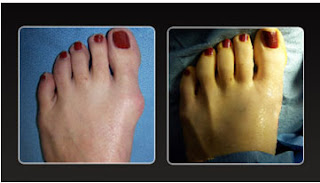
bunion may be characterized by
- Red, calloused skin along the big toe's inside edge.
- A bony bump at the toe.
- Joint pain aggravated by pressure from shoes.
- Big toe turning towards the other toes.
The
diagnosis for bunions starts with evaluation of past health and
careful examination of toe and joint. The surgeon may check the
toe and joint for their range of motion. This can be done while
the patient is sitting or standing so that the surgeon may see
the toe and joint at rest and while bearing. The surgeon may
ask questions like
- How long have you noticed the bunion?
- Does any activity make the bunions worse?
- Does any other joint hurt?
X-rays
may be done to check for bone problems or rule out other causes
of pain and swelling. In addition to that, blood tests or
arthrocentesis may also be done to check for other problems
that may cause joint pain and swelling.
The
first step for
bunion
treatment
is to take good care of feet and wear wide-toed shoes when
a bunion first starts to develop. It often solves the problem
preventing the need for further treatment. One may also be
helped by wearing felt or foam pads on the foot that may
protect the bunion. A device called spacers may also be used at
night to separate the first and second toes. These devices may
readily be available at drugstores.
As
bunions get worse and begin causing severe deformity or pain
bunion
removal
surgery may be performed. During the procedure, the
patient may receive anesthesia. The surgeon may then make an
incision to expose toe joint and bones. The deformed joint and
bones are repaired and kept in place using pins, screws, plates
or cast.
After
the surgery, the foot may be propped up to protect from injury
during the healing period. It may take 3-5 weeks for the foot
to recover fully. Patients immediately feel less pain after
bunion removal and be able to walk more easily.